Jiu-Jitsu
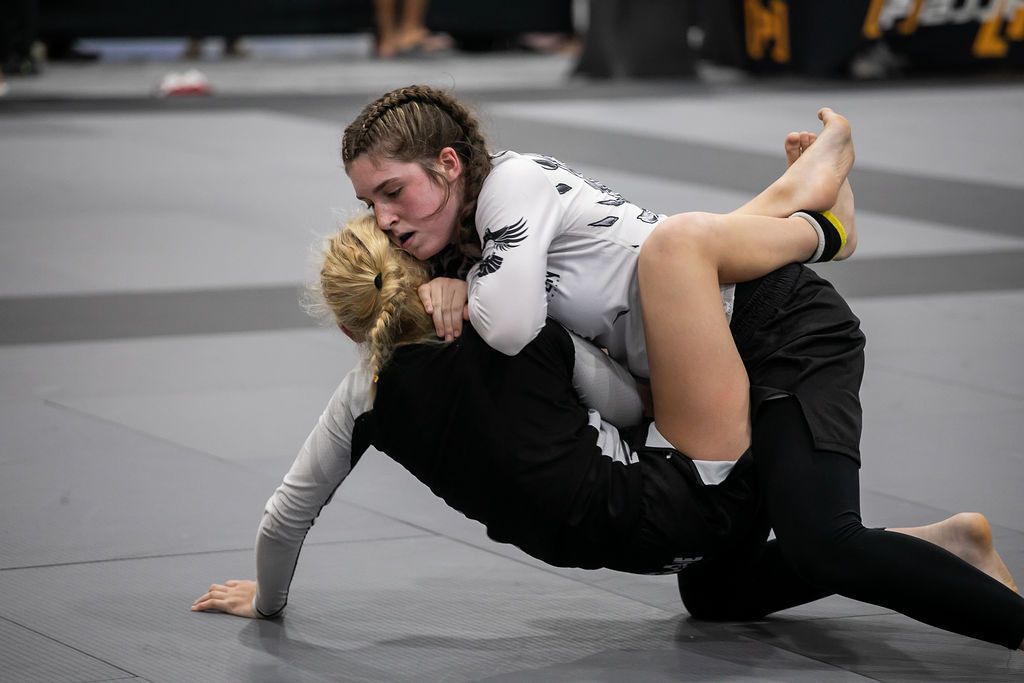
No-Gi Brazilian Jiu-Jitsu in Sparks Glencoe for athletes developing dynamic control and submission skills without the traditional uniform
Grappling Built on Speed and Adaptability
Without the gi fabric to slow exchanges, no-gi grappling forces you to react faster and maintain control through body positioning rather than grip anchors. Ground Control Hunt Valley structures no-gi training around takedowns, positional dominance, and submissions that work when sweat eliminates friction and your training partner can slip out of holds that would be secure with a gi. This format mirrors the demands of mixed martial arts and submission grappling competition, where speed and athleticism combine with technique to create effective offense and defense.
You learn to control opponents using underhooks, overhooks, body locks, and head control instead of relying on lapel or sleeve grips. Submissions shift toward leg locks, guillotines, rear-naked chokes, and arm triangles that don't require fabric to finish. Takedowns become essential because you can't pull guard as reliably without gi grips to break your fall or control the descent.
Request an evaluation session to see how no-gi training develops the explosive movement patterns used in modern grappling formats.
How No-Gi Training Develops Athletic Movement
The absence of grips means positions dissolve faster, which forces you to chain attacks together rather than holding a single dominant position for extended periods. You might secure side control, immediately threaten a kimura, transition to mount when your training partner defends, and finish with an arm triangle before they can escape. That constant movement builds the conditioning and positional fluidity that separates recreational grapplers from those who compete at high levels.
After several months of consistent training, you notice how much faster your reactions become when someone tries to pass your guard or escape your mount. Your body learns to feel weight shifts before they happen, and your hands move to the correct grips without conscious thought. Scrambles that once felt chaotic become opportunities to advance position because you've drilled the same transitions hundreds of times in live sparring.
No-gi training also prepares you for realistic self-defense scenarios where attackers won't be wearing clothing thick enough to grip reliably. The techniques you develop translate directly to situations where you need to control someone wearing a t-shirt or athletic gear, making the skill set immediately practical outside the academy.
Ground Control Hunt Valley structures no-gi sessions to develop the athleticism and technical adaptability required for modern grappling competition. Contact the academy to begin training in a format that emphasizes dynamic movement and realistic control scenarios.
Common Questions About No-Gi Training
Classes in Sparks Glencoe combine beginners learning fundamental positions with advanced practitioners refining competition strategies, so you train alongside grapplers at all skill levels.
What should I wear for no-gi classes?
Rash guards and grappling shorts or spats work best because they prevent mat burn during ground transitions and don't create grip opportunities for your training partner.
How do submissions differ without the gi?
You rely more on body mechanics and leverage rather than fabric-based chokes, with leg locks, guillotines, and arm bars becoming primary finishing options instead of collar chokes or gi-specific strangles.
When should I add no-gi training to my schedule?
Many grapplers train both gi and no-gi formats simultaneously because the skills complement each other, with gi training building technical precision and no-gi developing speed and adaptability.
What makes no-gi grappling useful for mixed martial arts?
The techniques, positions, and pace directly translate to MMA because fighters don't wear gi uniforms, and the emphasis on takedowns, top control, and fast submissions matches what works in the cage.
How does the pace compare to gi training?
Exchanges happen faster because sweat eliminates friction and there are no fabric grips to slow positional changes, which means you cover more ground during each sparring round and burn more calories per session.