Jiu-Jitsu
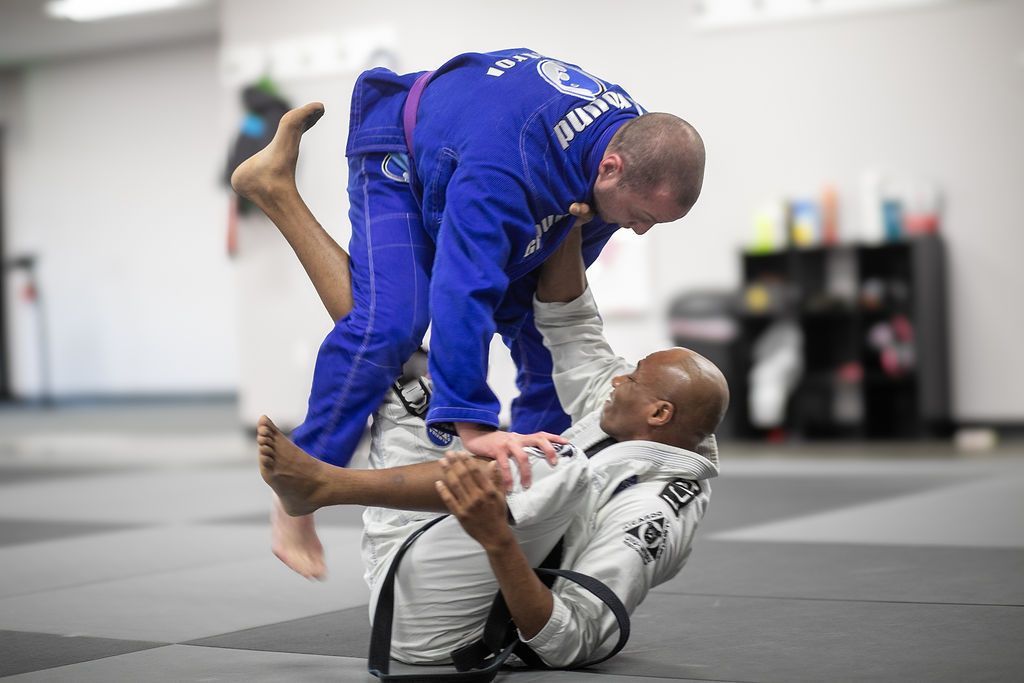
Gi Brazilian Jiu-Jitsu in Sparks Glencoe for practitioners developing technical precision and strategic patience through belt progression
Traditional Technique Built Through Controlled Grips
Ground Control Hunt Valley teaches Gi Brazilian Jiu-Jitsu using the traditional uniform that defines foundational grappling technique. The gi creates friction and grip opportunities absent in other grappling formats, forcing you to slow down and think through positional transitions rather than relying purely on speed or strength. This approach builds the technical foundation that carries into all other martial arts contexts.
Training involves learning specialized grips on the collar, sleeves, and lapels that control your training partner's posture and movement. You learn sweeps that off-balance opponents from guard positions, controls that pin them in place, and submissions that force a tap when executed correctly. The gi amplifies small technical errors, which means every drilling session reveals exactly where your mechanics need refinement.
Schedule an introductory session to learn how the belt ranking system structures your skill development over time.
What the Gi Changes About Your Approach
The uniform itself becomes part of the technique because the material provides dozens of grip variations unavailable in no-gi formats. You use lapel grips to break posture, sleeve grips to prevent hand posting, and pant grips to control leg movement during sweeps. These grips slow the pace of exchanges, which forces you to think several moves ahead rather than reacting in the moment. That slower tempo develops the strategic thinking that separates reactive grapplers from those who set traps and control the flow of a match.
Once you understand how to use the gi, you notice how much easier it becomes to hold positions that would slip away without fabric to grip. Side control stays tighter because you can pin the near arm with a cross-collar grip. Mount becomes more stable when you thread your hands under the collar to prevent bridging escapes. Submissions like the collar choke and loop choke only exist because the gi provides the material to wrap around the neck, giving you finishing options that require technical setup rather than raw squeezing力.
The belt system tracks your progress through white, blue, purple, brown, and black belt levels, with each rank requiring demonstrated proficiency in escapes, sweeps, submissions, and positional control. Progression takes years because the skill ceiling rises as you advance, and higher belts expose weaknesses in your game that weren't visible at earlier levels.
Ground Control Hunt Valley welcomes both beginners learning their first grip breaks and advanced practitioners refining competition strategies in the same training environment. Arrange a trial class to experience how the gi changes the pacing and technical depth of Brazilian Jiu-Jitsu.
Questions Before Starting Gi Training
Training in Sparks Glencoe includes practitioners at all belt levels working together in the same class, so you see the techniques demonstrated at full speed by experienced grapplers before you drill them yourself.
What type of gi should I buy before starting?
A basic white, blue, or black gi in your size works for the first few months, and the academy can recommend specific weaves and fits once you understand how different cuts affect mobility during rolling.
How does the gi change the techniques I can use?
Collar chokes, lapel guards, sleeve drags, and gi-specific sweeps like the scissor sweep or pendulum sweep become available because the fabric provides grip anchors that don't exist in no-gi grappling.
What happens during live sparring sessions?
You start from a specific position or from the knees, work to improve your position or secure a submission, and your training partner does the same, with both of you resetting when someone taps or the round timer ends.
How long does it typically take to earn the next belt?
Time between belts varies based on training frequency, competition performance, and technical proficiency, but most practitioners spend one to two years at white belt and two to three years at each subsequent rank.
Why does gi training feel slower than other grappling formats?
The friction from the fabric and the additional grip options create more control points, which means positions become more stable and escapes require more technical precision rather than explosive movement.