Jiu-Jitsu
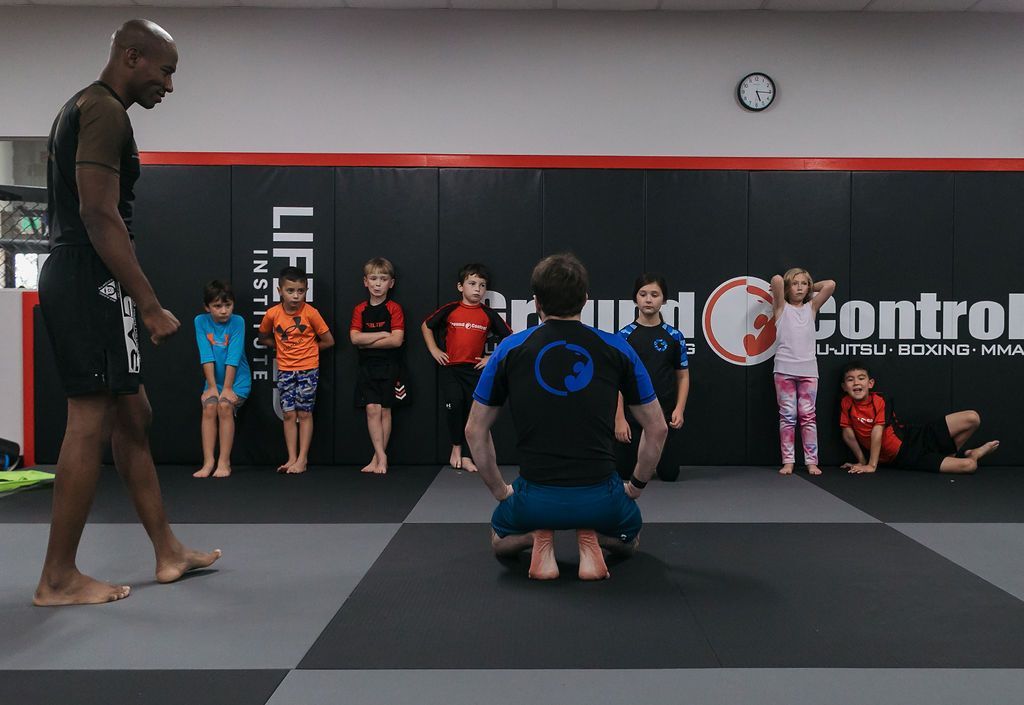
Kids & Teen Brazilian Jiu-Jitsu in Sparks Glencoe for children developing self-defense skills, athletic coordination, and mental resilience starting at age five
Discipline and Confidence Through Controlled Practice
Children as young as five years old begin learning Brazilian Jiu-Jitsu at Ground Control Hunt Valley through age-appropriate instruction that emphasizes fundamental movements and controlled partner work. Young students develop coordination and balance by learning how to move their bodies through basic positions like guard, mount, and side control before attempting submissions or complex transitions. The structured environment teaches respect for training partners, instructors, and the learning process itself, which builds discipline that carries into school and home life.
Kids classes focus on fundamental self-defense techniques that work against larger opponents, teaching children how to escape from underneath someone, how to control an aggressor without striking, and how to stay calm under physical pressure. Teens develop practical skills applicable to real-world situations while building the confidence that comes from knowing they can defend themselves effectively. The physical training improves overall athletic development because grappling requires full-body strength, flexibility, and cardiovascular endurance.
Schedule a trial class to see how age-appropriate instruction builds self-defense skills while developing coordination and mental focus.
How Brazilian Jiu-Jitsu Develops Young Athletes
Instructors break techniques into simple steps that young students can understand and replicate, using games and drills that make learning engaging rather than repetitive. Kids learn to follow instructions carefully because each technique requires specific hand placement, body positioning, and timing to work correctly. The belt ranking system provides clear goals that reward consistent effort and technical improvement, teaching children that progress comes from practice rather than instant results.
Parents notice improved focus and self-control after several months of training because Brazilian Jiu-Jitsu requires children to think strategically rather than react emotionally when challenged. Students learn to assess situations, choose appropriate responses, and execute techniques with patience instead of rushing through movements. The social environment encourages teamwork and mutual respect because training partners help each other improve rather than competing to win every exchange.
Teen training incorporates more advanced techniques and live sparring that prepares students for competition or simply accelerates their progression toward higher belt levels. Older students develop leadership skills by helping younger training partners learn basic techniques, and they build mental resilience by working through challenging sparring sessions where they face adversity and learn to persevere.
Ground Control Hunt Valley accepts kids and teens at all skill levels, providing a structured outlet for physical fitness and mental development through Brazilian Jiu-Jitsu. Arrange a trial session to introduce your child to self-defense training that builds discipline, confidence, and practical athletic skills in Sparks Glencoe.
Questions Parents Usually Ask
Ground Control Hunt Valley structures kids and teen classes to balance physical skill development with character building in a positive, supervised training environment.
What age should my child start Brazilian Jiu-Jitsu?
Children as young as five can begin learning fundamental movements and positions through age-appropriate drills, with older kids and teens progressing to more technical instruction and live sparring based on maturity and experience.
How does Brazilian Jiu-Jitsu help with bullying situations?
Students learn practical techniques to control aggressive peers without throwing punches, giving them the confidence to defend themselves while de-escalating confrontations through control rather than escalation.
What makes this different from other youth sports?
Brazilian Jiu-Jitsu is individual rather than team-based, so children progress at their own pace without being left behind or held back by group performance, and every training session provides immediate feedback through controlled sparring.
How do instructors keep young students engaged during class?
Age-appropriate games, partner drills, and frequent rotation between activities prevent boredom while reinforcing the same fundamental techniques through varied practice methods.
What will my child learn beyond physical techniques?
Goal-setting through belt progression, perseverance when facing difficult challenges, respect for training partners and instructors, and stress management through physical activity all develop alongside self-defense skills.